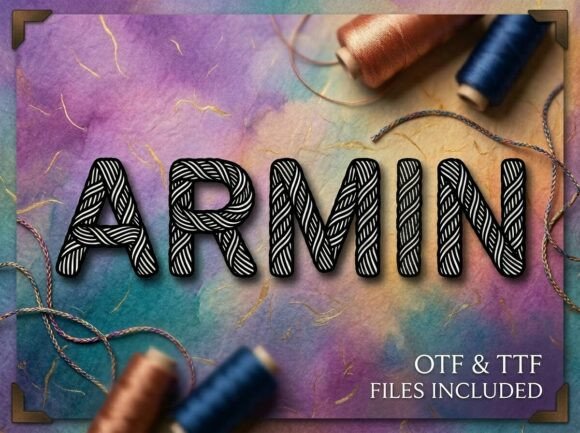
Armin: Crafting Warmth with a Textured Display Font
There's a certain magic in objects that bear the mark of a maker's hand. The subtle irregularities of a hand-thrown pot, the rich texture of a woven basket, the satisfying weight of a tailored wool coat. These things connect with us on a tactile level, speaking of care, time, and authenticity. For designers and brand builders, capturing that feeling in a digital space is a powerful challenge. This is precisely where a typeface like Armin finds its purpose. It's not just a collection of letters; it's a digital artifact that carries the soul of craftsmanship.
The Anatomy of a Handmade Typeface
At its core, Armin is a premium font designed for display use. Think of it as a serif font with a profound twist. Its letterforms are bold and rounded, giving it an immediate sense of solidity and warmth. The true character, however, lies in its interior. Each glyph is filled with an intricate, rhythmic texture that evokes the look of twisted rope, yarn, or even a finely knitted stitch. This isn't a simple filter or a rough edge; it's a considered, hand-drawn pattern that becomes part of the letter's structure. The result is a typeface that feels both substantial and cozy, bridging the gap between traditional textile arts and modern artisanal branding.
The personality of Armin is unmistakably warm, approachable, and rooted. It avoids the cold precision of many sans serif fonts and the formal elegance of classic serifs. Instead, it occupies a unique space, making it an ideal creative font for projects that need to communicate authenticity and handmade quality. It’s the typographic equivalent of a favorite, well-worn sweater—reliable, comforting, and full of character.
Where Armin Truly Shines: From Loom to Logo
Understanding a font's best applications is key to using it effectively. Armin's heavy structural weight and textured interior make it a specialist. It's built for high-impact, short-form text where its personality can be fully appreciated. You wouldn't set a novel in it, but you would absolutely use it to make that novel's cover unforgettable.
- Brand Identity & Logo Design: This is Armin's sweet spot. For independent knitwear brands, boutique tailors, artisan coffee roasters, or handcrafted home decor lines, this font becomes the cornerstone of a brand identity. It immediately communicates the brand's ethos without a single word of explanation. A logo set in Armin tells a story of quality materials and skilled hands.
- Packaging & Labels: On a shelf or in an online store, packaging needs to stand out. Armin excels on labels for yarn, candles, soaps, and gourmet foods. Its texture adds a layer of perceived value and craftsmanship that standard fonts cannot match. It works beautifully on kraft paper, textured cardstock, and matte finishes.
- Digital Presence: In the crowded digital landscape, grabbing attention is crucial. Use Armin for social media graphics, particularly bold headers on Instagram or Pinterest. It creates a strong visual anchor for posts about DIY projects, studio updates, or product launches. For web design, it’s perfect for hero section headlines, call-to-action banners, or any element that needs to make a bold, tactile statement.
- Editorial & Publishing: In editorial design, Armin can be a powerful tool for chapter titles, pull quotes, or magazine feature headers. It injects personality into layouts for lifestyle magazines, craft blogs, or cookbooks focused on traditional methods.
Practical Guidance for Working with Armin
Choosing a font is just the first step. Using it well requires a bit of strategy. Here’s how to integrate a display font like Armin into your projects for maximum effect.
Evaluating Fit and Testing Pairings
Before committing, consider your project's overall tone. Armin is perfect for brands that are warm, tactile, and artisanal. It might feel out of place for a tech startup or a luxury minimalist brand. Always test it with your specific content. Does it complement your imagery? Does it feel authentic to your message?
One of the most critical steps is font pairing. Because Armin is so textured and bold, it demands a simple, clean companion. Pair it with a neutral sans serif font for body text. Fonts like Lato, Open Sans, or Montserrat provide excellent readability and create a clear visual hierarchy. The contrast allows Armin's unique texture to be the star without overwhelming the reader. Avoid pairing it with other decorative, script fonts, or overly ornate serifs, as this will create visual chaos and harm readability.
Readability and Licensing Considerations
Armin is a display font, so its primary strength is in headlines and short bursts of text. Its intricate texture, while beautiful, can reduce legibility at very small sizes or in long paragraphs. Always prioritize readability. Use it for titles, logos, and subheadings, and opt for your chosen sans serif for longer descriptions or body copy.
Finally, understand the licensing. Most high-quality commercial fonts like Armin come with specific licenses. Ensure you have the correct one for your use case—whether it's for a single client project, a commercial product line, or unlimited desktop and web use. Reviewing the included styles (like bold or condensed versions, if available) and the license agreement upfront prevents legal headaches later and is a mark of professional practice.
In the end, a typeface like Armin is more than a design asset; it's a storytelling device. It allows small business owners, designers, and creators to weave a narrative of care and craftsmanship directly into their visual language. By choosing it for the right project and pairing it thoughtfully, you can create a brand presence that feels genuinely handmade, warm, and unforgettable.