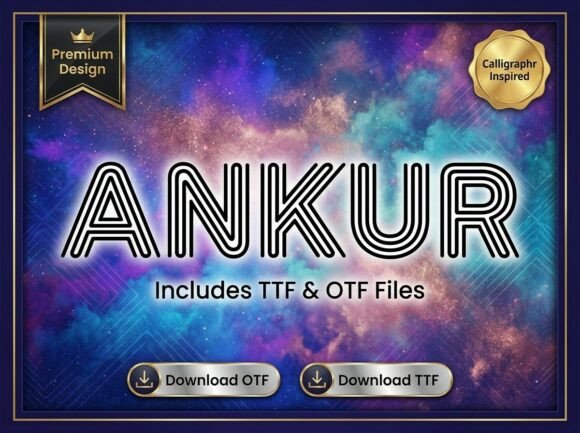
Ignite Your Designs with Ankur: A Display Typeface for the Digital Age
There’s a specific kind of energy you need to capture in design today. It’s the pulse of a synth bassline, the glow of a cityscape at night, the clean interface of a new app. It’s dynamic, digital, and unmistakably modern. Capturing that feeling requires the right tools, and typography is often the most powerful one in a designer’s kit. Enter Ankur, a cinematic display typeface built to embody this exact spirit. It’s not just a set of letters; it’s a visual shortcut to a high-tech, high-impact aesthetic.
Where Retro Soul Meets Modern Pixel
At first glance, Ankur commands attention with its tall, confident sans-serif letterforms. But look closer, and you’ll discover its defining characteristic: a rhythmic, triple-line inline detail. This isn't mere decoration. This intricate detailing is what gives the font its unique personality, acting as a bridge between the nostalgic warmth of 80s synthwave and the sleek precision of contemporary tech branding. The effect is a typeface that feels both familiar and forward-thinking.
The structural weight of Ankur is carefully balanced. It’s substantial enough to hold its own as a headline, ensuring readability and impact from a distance, yet refined enough that the inline details remain crisp and clear. This balance is key to its versatility. It avoids the heaviness that can make some display fonts feel clunky, while also steering clear of the thinness that might get lost in a busy composition. The result is a premium font with a high-energy personality that doesn’t sacrifice elegance.
Practical Applications: From Poster to Pixel
Understanding a font’s character is one thing; knowing where to deploy it is another. Ankur excels in projects where you need to make a bold, futuristic statement. Its design is practically tailor-made for the visual language of today’s creative industries.
For independent electronic music posters, it’s a perfect match. The font’s rhythm visually echoes the beat, and its digital soul aligns with the genre. Imagine it on a flyer for a warehouse event or as the title treatment on an album cover—it instantly sets the tone. Similarly, for futuristic gaming interfaces or esports branding, Ankur provides the clean, technical look that gamers expect, with enough stylistic flair to stand out in a crowded market.
In the world of branding, especially for tech startup identities, this display font communicates innovation and agility. It’s an excellent choice for a logo design that needs to feel cutting-edge without being illegible. Use it for your wordmark, and pair it with a clean, neutral sans serif for body copy. For high-impact social media headers, the "neon-and-novel" quality of Ankur is invaluable. It stops the scroll, conveying excitement and professionalism in a single glance, which is exactly what a strong brand identity requires.
Making It Work: A Designer's Practical Guide
Choosing a creative font like Ankur is just the first step. Integrating it effectively into your workflow is where the real value lies. Here’s how to approach it.
First, evaluate the project fit. Ask yourself: does the project’s core message align with a dynamic, digital, or retro-futuristic vibe? Ankur would be a superb choice for a music festival app, a cyberpunk-themed editorial design, or packaging for a new energy drink. It would likely feel out of place, however, for a traditional law firm or a rustic organic farm brand. The context is everything.
Next, master font pairing. As a powerful display font, Ankur needs a supporting cast. For body text, pair it with a highly readable sans serif font or even a simple serif font to create contrast and ensure comfortable reading. Avoid pairing it with another ornate script font or handwritten font, as they will compete for attention. The goal is hierarchy: let Ankur own the headlines while a quieter companion handles the paragraphs.
Always test for readability in context. View your design at the size it will be used—whether that’s a tiny favicon or a massive billboard. The inline details are a feature, but at very small sizes, they can merge. For web design or small digital applications, consider using a slightly bolder weight or ensuring there is ample contrast with the background.
Finally, review the commercial licensing. As a commercial font, ensure you have the appropriate license for your use case, whether it’s for a single client project, a series of social media graphics, or a product for sale. Respecting the license protects you legally and supports the typographers who create these valuable design assets.
In the end, Ankur is more than just another typeface. It’s a tool for building a specific kind of modern typography narrative. It gives designers, entrepreneurs, and creators a direct line to an aesthetic that resonates with a contemporary audience. By understanding its personality and applying it with intention, you can use it to elevate your work from simply looking good to feeling genuinely alive and relevant.