Calvin: The Botanical Serif for Heritage Branding
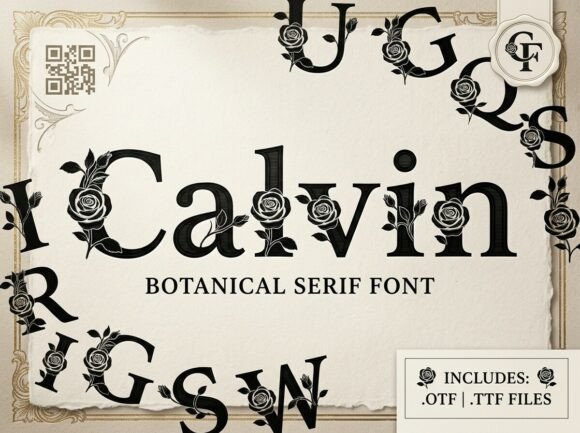
There are typefaces that simply set a mood, and then there are those that tell a complete story before a reader has even finished the first word. Calvin falls firmly into the latter category. At its core, it is an ornate, high-contrast serif font, but that technical description hardly does it justice. Imagine a sturdy, classical skeleton—the kind of structure you might find in a historic Didone typeface—but instead of stopping there, the designer has woven a garden through it. Every vertical stem is a trellis for hand-drawn, long-stemmed roses, creating a visual effect that is less like typing and more like cultivating.
If you are a designer or brand strategist looking for a premium font that bridges the gap between rigid tradition and organic whimsy, this typeface demands your attention. It is a masterpiece of botanical typography, where the elegance of 19th-century type design meets the romanticism of a Victorian conservatory. The appeal here is specific and potent: it offers the legibility and gravity of a serif font while delivering the artistic flair of a custom illustration.
The Anatomy of a Garden: Visual Characteristics
To truly understand the utility of Calvin, you have to look at how it manages its density. High-contrast serif fonts can often feel stark or severe, relying on the interplay between thick downstrokes and hairline serifs to create rhythm. Calvin retains that structural integrity, ensuring the text remains anchored, but it softens the blow with its floral embellishments. The "high-contrast skeleton" gives the font its legibility, preventing the decorative elements from turning the text into an unreadable mess.
The illustrations are not merely pasted on top; they are integrated. The roses climb the ascenders of letters like 'h', 'l', and 'b', and bloom at the terminals of 'c' and 'e'. This creates a continuous, flowing texture when you use it for display purposes. However, it is crucial to treat this as a display font rather than a body text solution. The density of the artwork makes it perfect for headlines, logos, and hero images, but in small sizes, those delicate stems would likely clog up and lose definition.
Strategic Applications: Where Calvin Thrives
Choosing a typeface is an exercise in psychology. You are selecting a voice for your brand before it speaks. Calvin speaks with a voice that is unmistakably artisanal, luxurious, and steeped in heritage. It is not a font for a tech startup trying to look "disruptive" or a fast-food chain looking for speed. It is the definitive choice for industries where time, care, and tradition are the primary selling points.
Consider the impact of using this typeface in the following contexts:
- Luxury Floral Shop Identities: This is the most natural fit. A logo set in Calvin immediately communicates that the business deals in high-end arrangements, not just convenience bouquets. It pairs beautifully with a clean sans serif font for body copy.
- Wedding Invitations and Stationery: The romantic nature of the font makes it ideal for matrimonial designs. It evokes a sense of timeless love, perfect for couples looking for a vintage or botanical aesthetic.
- Heritage Perfume Labels and Artisanal Packaging: If you are designing packaging for a product that relies on "secret recipes" or "old-world craftsmanship," this font adds instant credibility. It suggests that the contents are as carefully curated as the typography.
- Editorial Design: Use it for drop caps or pull quotes in lifestyle magazines to add a touch of sophistication and break up the monotony of standard body text.
Designing with Delicacy: Practical Guidance
When you bring a creative font like Calvin into your workflow, you need to manage the visual hierarchy carefully. Because it is so dense and detailed, it naturally draws the eye. This makes it a powerful tool for hierarchy, but it can easily overpower other elements if not balanced correctly.
The most effective strategy for font pairing is contrast. Since Calvin is a serif font with heavy organic details, it pairs best with a geometric sans serif font. Think of clean, modern typefaces like Montserrat, Lato, or Futura. You want a partner that steps back and lets the floral elements shine. Avoid pairing it with other decorative, handwritten, or script fonts, as this will result in visual chaos and destroy readability.
When testing this typeface for a project, pay close attention to kerning and tracking. Because the floral elements often extend beyond the standard bounding box of the characters, you may need to adjust the spacing manually to prevent roses from colliding with other letters. This is common with ornate display fonts and is part of the craft of high-end typography.
Readability and Licensing Considerations
Readability is the cornerstone of good design, but it is relative. Calvin is highly legible when used for short bursts of text—logos, titles, or headers. However, if you attempt to write a paragraph with it, the reader will fatigue quickly. The brain processes words by recognizing shapes, and the intricate floral details in Calvin alter those shapes significantly. Respect the font's nature; use it for impact, not information overload.
Furthermore, as a commercial font, it is essential to review the licensing terms before finalizing your design assets. Ensure that the license covers your specific use case, whether it is for digital web design, social media graphics, or physical print production. Most premium fonts offer different tiers for desktop use versus web embedding, so verify this early in the design process to avoid legal headaches later.
The Verdict on Heritage Typography
In a market saturated with clean, minimalist sans serifs and stark, modern typography, Calvin offers a return to ornamentation. It reminds us that typography can be illustrative and emotive. For the right project, it is not just a font choice; it is a brand strategy. It tells your audience that you value beauty, that you appreciate the past, and that your brand has roots.
Whether you are a crafter designing a logo for a boutique shop or a publisher looking for a distinctive header font, Calvin provides a robust, artistic solution. It proves that even in the digital age, the beauty of a blossoming alphabet is a timeless design asset. By integrating this typeface thoughtfully, you can elevate a standard design into a piece of botanical art that resonates with sophistication and charm.