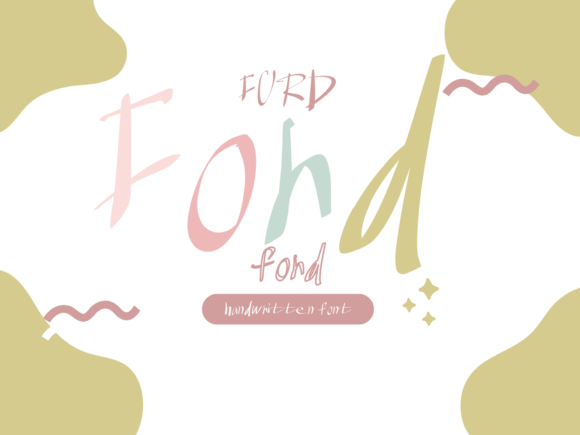
Ford: The Sweet Handwritten Font for Authentic Design
If you spend any time scrolling through design trends, you’ll notice a significant shift toward authenticity. We’ve moved past the era of rigid, corporate uniformity and into a space where brands want to feel human. This is exactly where the Ford typeface shines. It isn’t just another script font in a crowded library; it is a distinctively sweet and friendly handwritten font that captures the warmth of a personal note. For designers, entrepreneurs, and content creators looking to bridge the gap between professional polish and personal touch, understanding how to leverage Ford is a game-changer.
Visual Characteristics and Personality
At first glance, Ford feels approachable. The letterforms are constructed with a natural flow that mimics the inconsistency of actual handwriting, yet they maintain a legibility that many script fonts struggle to achieve. The strokes have a soft, rounded quality, avoiding the sharp, aggressive angles found in modern sans-serif typefaces. This gives the typeface an inherent kindness—it looks like something a friend would write to you.
The personality of Ford is undeniably playful, but it doesn't cross the line into childish. This is a crucial distinction for professional use. It carries a modern typography sensibility, meaning it respects white space and kerning while retaining its organic charm. Whether you are using it for a logo or a quick social media caption, it imparts a sense of ease and creativity. It’s the visual equivalent of a warm smile, making it an excellent choice for projects that need to disarm the viewer and invite them in.
Real-World Applications: Where Ford Fits Best
The versatility of a handwritten font like Ford is often underestimated. Because it balances style with readability, it functions well as both a display font and for shorter blocks of text where personality is paramount. Here is how different professionals can apply it:
- Branding and Logo Design: For small businesses, particularly in the lifestyle, beauty, or food sectors, a logo design using Ford can instantly communicate a boutique feel. It tells customers that there is a human behind the business. It works beautifully for bakeries, florists, and handmade craft shops.
- Packaging Design: Imagine this font on a label for artisanal coffee or organic skincare. The packaging design benefits from Ford’s friendly nature, suggesting that the product inside is crafted with care rather than mass-produced by a machine.
- Editorial and Publishing: In editorial design, Ford is perfect for pull quotes, chapter titles, or magazine headers. It provides a visual break from dense body text, usually set in a serif font or sans serif font, drawing the reader's eye to key emotional moments in the copy.
- Digital and Web Design: In the realm of web design, legibility is king. Ford performs well for hero section headers or call-to-action buttons where you want to soften the user experience. However, it should be used sparingly to maintain loading speeds and readability.
- Social Media and Marketing: Social media graphics need to stop the scroll. Ford’s unique style makes it a strong contender for Instagram stories, quote cards, and promotional banners. It helps content creators establish a recognizable voice that feels personal rather than corporate.
The Strategic Impact on Brand Identity
Choosing a font is rarely just about aesthetics; it is a strategic decision that influences how your audience perceives your brand. Typography is a silent ambassador. When you integrate a premium font like Ford into your brand identity, you are making a deliberate choice to be seen as accessible and creative.
Visual Hierarchy and Readability: Good design guides the viewer's eye. Ford works exceptionally well for creating a strong hierarchy. By using it for headers and pairing it with a clean, geometric sans serif font for body copy, you create a dynamic contrast. The handwritten style draws attention, while the clean font ensures the message is easily digestible. This contrast is a staple of modern typography, preventing designs from feeling flat or monotonous.
Audience Engagement: There is a psychological element to handwritten text. It feels less like an advertisement and more like a conversation. This can lower resistance to marketing messages. For entrepreneurs and marketers, using Ford in email headers or landing pages can subtly increase engagement because it feels less "salesy" and more authentic. It humanizes the digital experience.
Practical Guide to Using the Ford Typeface
Adopting a new design asset requires more than just installation. To get the most out of Ford, consider these practical steps for implementation:
- Evaluate Project Fit: Before committing, look at the "voice" of your project. If you are designing for a law firm or a cybersecurity company, Ford might be too casual. However, if the project requires warmth, creativity, or a handmade touch, it is an ideal fit. It is a creative font best suited for industries where personality is a selling point.
- Mastering Font Pairing: The success of Ford relies heavily on its neighbors. As a general rule, pair decorative or handwritten fonts with something neutral.
- Ford + Serif: Pairing Ford with a classic serif creates a "modern vintage" vibe. It feels established yet trendy.
- Ford + Sans Serif: This is the most common and safest pairing. It keeps the layout clean and modern, letting Ford handle the personality while the sans serif handles the information.
- Check the Glyphs: A high-quality commercial font often comes with alternates, ligatures, and stylistic sets. Check if Ford includes different versions of specific letters (like 'g' or 'r'). Using these variations prevents repetition and makes the text look more like genuine handwriting.
- Spacing and Sizing: Handwritten fonts often require more generous line height (leading) than standard text fonts. If the lines are too tight, the ascenders and descenders can clash, hurting readability. Give Ford room to breathe.
- Licensing: Always verify the licensing. If you are using it for a client’s logo, ensure your license covers commercial use and logo embedding. Most premium fonts offer different tiers for desktop, web, and app usage.
Unlocking Creativity
The beauty of the Ford typeface lies in its adaptability. It is a tool that encourages experimentation. Whether you are a crafter designing a wedding invitation, a publisher looking for a fresh header style, or a startup founder building a brand from scratch, Ford offers a way to inject humanity into your work. It proves that professional design doesn't have to be cold or impersonal. With its sweet, friendly demeanor, Ford reminds us that at the end of the day, design is about connecting with people. The only limit is your imagination.