Kabyah: Merging Traditional Indian Calligraphy with Modern Design
In the search for a typeface that conveys both cultural depth and striking visual appeal, designers often encounter a gap between standard digital fonts and authentic hand-lettering. Kabyah bridges that gap effectively. It is not merely a collection of characters; it is an intricate script font that captures the fluidity and grace of traditional Eastern calligraphy. For creatives looking to infuse their projects with a sense of heritage and elegance, Kabyah offers a sophisticated solution that stands apart from the geometric sans-serifs dominating the modern landscape.
The Anatomy of Eastern Elegance
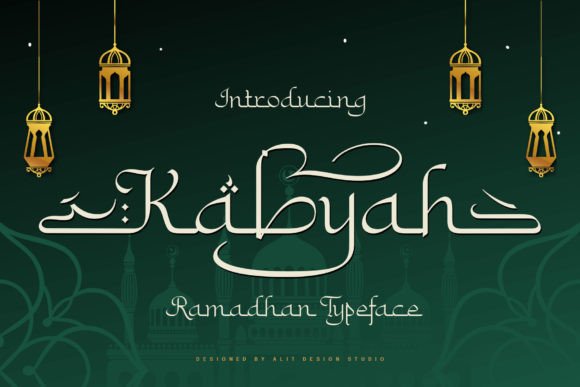
When you first examine Kabyah, the defining characteristic is its balance between complexity and legibility. Many handwritten fonts tend to look chaotic or become difficult to read at smaller sizes. Kabyah, however, maintains a structured rhythm. The letterforms feature flowing strokes that mimic the pressure variations of a calligrapher’s pen, yet they are carefully digitized to ensure consistency. The curves are graceful, often sweeping into delicate terminals, while the connections between letters feel organic rather than mechanical.
This premium font is designed with modern typography in mind, meaning it respects the rules of spacing and kerning that make text breathable. It avoids the trap of being overly ornate, which can limit a font to only large headlines. Instead, Kabyah brings a touch of Eastern elegance that works beautifully in medium-sized text blocks, provided the background allows for clear contrast. It is a typeface that commands attention without shouting, relying on its artistic merit to draw the viewer in.
Strategic Applications for Branding and Marketing
Understanding where to deploy a creative font like Kabyah is just as important as the font itself. In the realm of brand identity, typeface selection is a primary signal of a brand's personality. Kabyah is an exceptional choice for businesses aiming to project authenticity, luxury, or artisanal quality. Consider a boutique hotel, a high-end tea brand, or a wellness retreat; Kabyah can serve as the cornerstone of their logo design, instantly communicating a specific cultural or organic ethos.
Beyond logos, the font excels in packaging design. On a crowded shelf, a product needs to tell its story instantly. The intricate detailing of Kabyah can elevate a simple label into a piece of art, suggesting that the contents inside are crafted with equal care. This visual cue is powerful in marketing—it suggests quality before the customer even interacts with the product.
Digital and Editorial Usage
In the digital space, web design and social media graphics rely heavily on visual hierarchy to stop the scroll. Kabyah is a fantastic display font for hero sections on websites or for high-impact quotes on Instagram and Pinterest. Its unique silhouette breaks the monotony of standard web fonts, making it ideal for lifestyle blogs, fashion editorials, and travel content.
For publishers and content creators, editorial design presents another opportunity. While Kabyah might not be the best choice for the body text of a newspaper due to its stylized nature, it is perfect for chapter titles, pull quotes, or magazine mastheads. It adds a layer of sophistication to print layouts that generic serif fonts often lack. Furthermore, for event planners and stationers, this font is a game-changer for wedding invitations and event collateral, where the aesthetic of the text is as important as the information it conveys.
Technical Utility and The Power of PUA Encoding
A common frustration for designers is finding a beautiful font only to discover it lacks the necessary technical features for professional use. Kabyah solves this problem through its PUA (Private Use Areas) encoding. For the non-technical user, this means the font includes a vast library of alternate characters, ligatures, and swashes that are fully accessible even without advanced design software.
Ligatures are specific letter combinations—like "th" or "st"—that are joined to create a more natural flow. In calligraphy-inspired fonts, these are essential for avoiding awkward collisions between letters. With Kabyah, these features allow you to customize the look of the text to fit specific words perfectly. You can swap a standard "a" for a more ornate version or add a sweeping tail to a capital letter. This level of customization allows for a truly bespoke feel in your design assets, ensuring that your typography looks hand-crafted rather than typed.
Practical Guidance for Implementation
Integrating a distinct typeface like Kabyah into your workflow requires a strategic approach. It is not a "set it and forget it" tool; it requires pairing and testing to maximize its potential.
Mastering Font Pairing
Because Kabyah is a script font with high visual texture, it pairs best with cleaner, more neutral typefaces. A common mistake is pairing a decorative script with another ornate serif font, which results in a cluttered, illegible design. Instead, look for a sturdy sans serif font for your body text. The geometric simplicity of a sans serif provides a modern counterpoint to Kabyah’s traditional curves, creating a balanced visual hierarchy. The contrast ensures that the headings pop while the supporting text remains easy to read.
Evaluating Readability and Context
While Kabyah is designed with legibility in mind, context is king. When using it for web design, ensure the font size is large enough to appreciate the detailing. If the text is too small, the intricate curves may blur together, especially on lower-resolution screens. Always test your designs on mobile devices, as screen size can drastically affect how script fonts render.
Additionally, consider the "personality" match. Kabyah has a strong voice. If your project is a corporate law firm or a technical manual, this font might feel out of place. It thrives in environments that value creativity, culture, and aesthetic pleasure. For small business owners and crafters, this is an asset. It allows you to compete visually with larger brands by using a commercial font that looks expensive and exclusive.
Licensing and Commercial Use
Finally, professional integrity matters. Always verify the licensing of your design assets. Kabyah is typically available for commercial use, but the specific license terms (desktop vs. webfont vs. app) can vary. Ensure your license covers your intended application, whether you are printing 500 business cards or deploying a high-traffic e-commerce site. Respecting font licensing not only keeps you legally compliant but supports the typographers who create these tools for the creative community.
Ultimately, Kabyah is more than just a font; it is a stylistic tool that bridges the gap between traditional artistry and modern communication. By leveraging its unique aesthetic and technical capabilities, designers and creators can produce work that is not only visually stunning but deeply resonant with their audience.