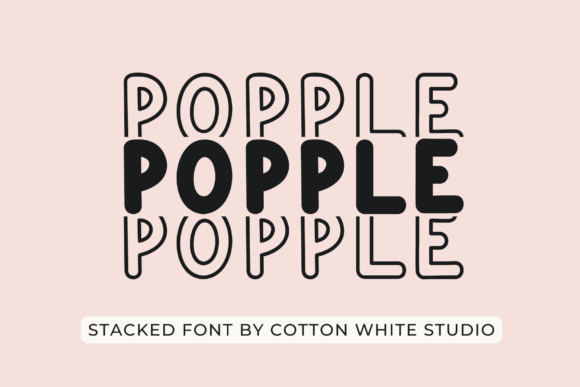
Popple: The Bold Display Typeface for Modern Brands
In a world saturated with content, standing out isn't just an option; it's a requirement. Whether you are launching a new product, designing a logo, or crafting a social media campaign, the typography you choose speaks volumes before a single word is read. Enter Popple, a typeface designed specifically to cut through the noise. This isn't your average text font meant for long-form reading; Popple is a display font crafted for the spotlight. It is built for headlines, titles, and short bursts of text where impact is the primary goal. With its bold, attention-grabbing appearance and unique letterforms, Popple offers a fresh alternative to traditional styles, making it an essential tool for designers, entrepreneurs, and content creators looking to inject personality into their work.
Visual Characteristics and Design Personality
At first glance, Popple commands attention. It features a heavy, substantial weight that gives it a confident and grounded presence. However, what truly sets this typeface apart is its creative interpretation of letterforms. Unlike rigid geometric fonts, Popple introduces subtle quirks and fluidity. It strikes a balance between the structure of a modern typography specimen and the warmth of a creative font. The characters often feature soft, rounded terminals or distinctive curves that prevent the bold weight from feeling too aggressive or blocky.
The personality of Popple can be described as friendly yet authoritative. It doesn't shout with sharp edges; instead, it projects confidence through volume and style. This makes it an incredibly versatile premium font. It avoids the coldness often associated with corporate sans serif font families while steering clear of the casual illegibility of some handwritten font styles. For a brand identity that needs to feel approachable, modern, and energetic, Popple provides the perfect visual voice. It is the typographic equivalent of a firm handshake combined with a genuine smile—memorable, distinct, and professional.
Where Popple Shines: Applications Across Industries
Because Popple is engineered for short-form text, its applications are vast and varied. For logo design, it is a powerhouse. A logo needs to be scalable and recognizable, and Popple’s unique silhouettes ensure that a brand mark stands out in a crowded marketplace. It works exceptionally well for startups, lifestyle brands, and creative agencies that want to avoid generic corporate aesthetics.
In the realm of packaging design, shelf appeal is everything. Imagine a coffee bag, a skincare bottle, or a craft beer label. The product name needs to be legible from a distance and intriguing up close. Popple’s boldness handles the distance legibility, while its creative details reward the customer who picks up the product for a closer look. Similarly, in editorial design, such as magazine covers or blog headers, Popple can anchor the page with a strong focal point, drawing the reader into the content beneath it.
Digital applications are where this commercial font truly thrives today. Social media graphics are consumed in milliseconds. To stop the scroll, you need high-contrast visuals. Popple provides that visual punch for Instagram stories, Pinterest pins, and YouTube thumbnails. For web design, while it shouldn't be used for body copy (which requires high readability over long distances), it is perfect for hero sections, call-to-action buttons, and navigation headers. It sets the tone immediately upon landing on a page.
The Strategic Impact on Brand Perception
Typography is rarely just about aesthetics; it is a strategic tool that influences how an audience perceives a brand. Choosing Popple is a deliberate move toward modern typography and innovation. It signals that a brand is current, creative, and willing to break from the status quo.
Using a distinct typeface like Popple aids in recognition. In marketing, consistency is key. When you use a specific, memorable font across your marketing collateral—from business cards to email headers—you create a cohesive visual language. This consistency builds trust. When a customer sees a Popple headline, they begin to associate that specific visual style with your brand's voice.
Furthermore, Popple influences visual hierarchy. Good design guides the eye. Because Popple is so effective at grabbing attention, it naturally creates a clear distinction between the headline (the hook) and the body copy (the information). This improves the overall user experience of your design assets, making your message easier to digest. It helps establish a professional look without requiring complex design layouts; the font does the heavy lifting.
Practical Guide: Working with Popple
Integrating a new typeface into your workflow requires more than just a download. To get the most out of Popple, consider these practical design observations and recommendations.
Evaluating Project Fit
Before applying Popple, ask yourself about the goal of the text. Is it meant to be read for five minutes or scanned for five seconds? If you are designing a novel or a legal contract, this is not the right choice. However, if you are creating a poster, a t-shirt graphic, a wedding invitation header, or a website banner, Popple is an excellent fit. It is designed for impact, not endurance.
Mastering Font Pairing
Because Popple is a display font with a strong personality, it requires a partner that knows how to take a back seat. The art of font pairing is about contrast and harmony. You generally want to pair Popple with a clean, neutral sans serif font or a classic serif font for the body text. Avoid pairing it with other decorative, script font, or handwritten font styles, as this will create visual chaos. Let Popple be the star of the show, supported by a reliable, readable secondary typeface.
Readability and Spacing
Even with display fonts, readability matters. However, the rules are different here. While body text relies on x-height and spacing for comfortable reading, display text relies on shape and silhouette. When using Popple, pay attention to kerning (the space between specific letters). Sometimes, bold and creative fonts need manual kerning adjustments in your design software to ensure letters like 'A' and 'V' don't look too far apart or too close together. Also, be mindful of leading (line height); give Popple room to breathe so its unique letterforms don't collide with the lines below.
Licensing and Styles
When investing in a premium font, always review the licensing terms. Ensure the license covers your intended use—whether that is for a local small business, a digital product, or a large-scale commercial campaign. Additionally, check what styles are included. Does the family come with bold and italic variations? Even if Popple is primarily a headline font, having access to slightly lighter weights or italicized versions can provide versatility for sub-headlines and accents within your brand identity system.
Popple is more than just a collection of letters; it is a design asset that brings energy and clarity to modern communication. By understanding its strengths and applying it thoughtfully, you can elevate your creative projects and ensure your message is not just seen, but felt. Whether you are a blogger designing your next header, a small business owner refreshing your packaging, or a marketer crafting a high-converting landing page, Popple offers the visual authority and creative flair needed to succeed in today’s visual landscape.