Stationery: A Dingbat Font for Your Creative Toolkit
More Than a Font: A Visual Language for Makers and Thinkers
Finding the right visual assets for a project can feel like a treasure hunt. You need something that communicates instantly, feels authentic, and fits seamlessly into your workflow. This is where a specialized dingbat font like Stationery proves its worth. It’s not a traditional typeface for paragraphs of text, but a curated library of icons designed to function as a creative font. Think of it as a direct line to a "productive-and-artistic" aesthetic, capturing the soul of a well-organized creative desk.
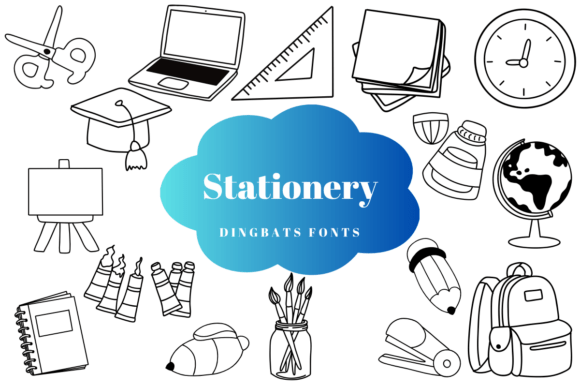
The visual personality of Stationery is defined by its clean monolinear outlines and a rhythmic doodle aesthetic. Each icon—from the laptop and globe to the paint tube and drafting ruler—feels hand-drawn yet precise. This balance is key. It avoids the overly polished, generic look of some clip art while steering clear of a messy, informal scratch. The result is a versatile set of design assets that feels both approachable and professional, making it a standout premium font in its category.
Where Stationery Truly Shines: Real-World Applications
The true test of any design asset is its practical application. Stationery excels in scenarios where you need to inject personality and clarity without overwhelming a layout. Its strength lies in its specificity; it speaks the language of education, creativity, and modern work.
For independent educator branding, this font is invaluable. Imagine a tutor's welcome packet or a workshop's promotional flyer. Using Stationery icons to denote different subjects, materials needed, or session types creates an instant, friendly visual shorthand. It builds a cohesive brand identity that feels knowledgeable and hands-on. Similarly, in bullet journal layouts and planners, these icons help organize sections, highlight priorities, and add decorative flair that’s both functional and beautiful.
In the realm of marketing and social media graphics, Stationery is a powerhouse for "back-to-work" campaigns and educational content. A LinkedIn post about productivity tips, an Instagram carousel for a creative course, or a Pinterest graphic for a new blog series can all benefit from its clear, thematic icons. They break up text, guide the viewer's eye, and reinforce the topic at a glance. This is modern typography in action—using symbolic type to enhance communication.
Beyond digital, its applications in print and packaging design are equally compelling. Think of the sticker sheets for a subscription box, the icons on a journal's cover, or the instructional graphics in a DIY kit. The font's clean lines reproduce well at various sizes, ensuring your editorial design or product packaging remains crisp and professional. It’s a tool that helps bridge the gap between digital content and physical products, maintaining a consistent visual thread across all touchpoints.
Integrating Stationery Into Your Design Workflow
Adopting a new design asset like Stationery requires a thoughtful approach to ensure it elevates rather than complicates your work. The goal is to use it with intention, treating it as a supporting actor that enhances your main message.
Evaluating Project Fit: Before you dive in, ask if the project's tone aligns with Stationery's personality. It’s perfect for educational content, creative businesses, personal development, and artistic communities. It might feel less suited for ultra-corporate finance reports or high-fashion luxury branding. The icon library is your guide—if the icons represent concepts relevant to your project, you're on the right track.
Mastering Font Pairing: This is where Stationery's utility really expands. Because it's a dingbat font, it pairs best with straightforward, highly readable typefaces. Use a clean sans serif font like Helvetica or Open Sans for body text to let the icons stand out. For headings, a sturdy serif font like Georgia or a simple script font can create a pleasing hierarchy. The key is contrast: let Stationery provide the visual interest while your primary typeface handles the heavy lifting of readability. Avoid pairing it with another complex handwritten font, as this can create visual chaos.
Practical Considerations: Always test the font at the size you intend to use it. While the monolinear design scales well, extremely small sizes might lose some detail. Check the included styles; some premium dingbat fonts offer multiple weights or themed sets, which can add valuable flexibility. For any commercial use, verify the licensing. A commercial font license is essential for client work, merchandise, or any project where you are paid. This protects both you and the font creator.
Ultimately, Stationery is more than a collection of cute pictures. It's a strategic tool for visual storytelling. It helps you build brand recognition through consistent, thematic imagery. It improves visual hierarchy by providing clear, non-textual focal points. And it boosts audience engagement by making information more digestible and visually appealing. By integrating it thoughtfully, you're not just decorating a page—you're communicating more effectively with your audience, one icon at a time.