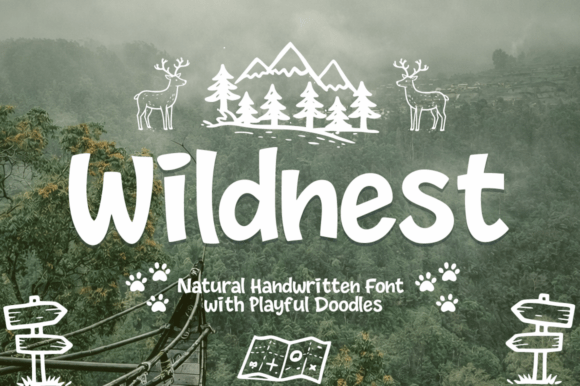
Wildnest: Capture the Spirit of Adventure in Your Designs
There’s a certain feeling you get when you find a weathered trail marker or flip through the pages of a well-loved travel journal. It’s authentic, a little rough around the edges, and full of genuine character. Capturing that specific, earthy vibe in a digital design can be a challenge. Most fonts feel too polished, too perfect. This is precisely where the Wildnest typeface steps in, offering a direct line to the raw beauty of the great outdoors.
Wildnest is more than just a handwritten font; it’s a storytelling toolkit. Its organic, slightly irregular letterforms are designed to feel like they were jotted down by hand, perhaps with a piece of charcoal or a trusty pen. This isn't about sloppy imperfection—it's about intentional, human character. The letters have a natural flow and a warm, approachable personality that immediately signals authenticity. For designers, this means you’re not just choosing a typeface; you’re adopting a voice that speaks of exploration, sustainability, and unfiltered nature.
The Anatomy of an Explorer's Font
At its core, Wildnest is a display font built for impact. Its visual style is defined by its handcrafted texture and slightly uneven baseline, which prevents it from looking sterile or machine-made. This character makes it a powerful tool for logo design, where establishing a unique and memorable brand identity is paramount. Imagine a hiking club or an eco-friendly apparel brand; Wildnest provides the foundational personality that says, “We value the journey and the planet.”
What truly sets this premium font apart is its accompanying set of playful doodles. These aren't generic clip art. The included illustrations of mountains, trees, paw prints, and nature symbols are drawn in the same stylistic language as the letters. This cohesion allows you to create a complete visual narrative. You can seamlessly integrate a mountain peak into a headline or use paw prints as a decorative border, making your brand identity feel unified and deeply considered. This is a significant advantage over using separate design assets that may clash stylistically.
From Trailhead to Text: Practical Applications
So, where does Wildnest work best? Its strength lies in projects where connection, warmth, and a sense of place are key. Consider these practical scenarios:
- Branding & Packaging: It’s a natural fit for packaging design for camping gear, organic products, or artisanal goods. Paired with earthy color palettes and textured, recycled paper backgrounds, the font elevates a product from a simple item to an experience. The same principle applies to logo design for outdoor schools or sustainable businesses.
- Editorial & Publishing: For children’s adventure books, travel magazines, or nature-focused blogs, Wildnest injects a dose of whimsy and approachability. It can make editorial design feel less formal and more inviting, perfect for headers, pull quotes, or chapter titles in a publication design project.
- Digital & Social Media: In the crowded space of social media graphics, authenticity cuts through the noise. Use Wildnest for Instagram posts, story highlights, or YouTube thumbnails for outdoor influencers, travel vloggers, or mindfulness coaches. It helps create a cohesive feed that feels genuine and curated. For web design, it’s excellent for hero sections or call-to-action buttons, but always test for readability at smaller sizes.
- Personal & Commercial Projects: From designing a family reunion t-shirt to creating inspirational posters for a home office, or even for crafting invitations, the font’s charm is versatile. For small business owners, it offers a way to add a handcrafted, eco-friendly vibe to invoices, thank-you cards, or promotional materials without needing custom illustration.
Making Wildnest Work for You: A Designer's Guide
Integrating any new typeface requires thoughtful application. Here’s how to get the most out of Wildnest:
Evaluate the Fit: Before you commit, ask if the project’s tone aligns with Wildnest’s personality. It excels in contexts that value warmth, nature, and a human touch. For a corporate law firm or a high-tech startup, a sans serif font or a clean serif font might be more appropriate. Wildnest is for the storytellers.
Master the Font Pairing: A handwritten font like Wildnest is rarely used for body text. Its power is in headlines, logos, and accents. To create effective visual hierarchy, pair it with a highly readable sans serif font or a classic serif font for longer paragraphs. This contrast ensures your main message in Wildnest pops while the supporting text remains clear and professional. This is a fundamental principle of modern typography.
Test for Readability: Always conduct a readability test. View your design at the intended size—on a mobile screen, a printed label, or a poster from a distance. The slight irregularity of Wildnest is part of its charm, but it should never hinder comprehension. Check letter spacing (tracking) and line height (leading) to ensure the text flows smoothly.
Explore the Full Character Set: A creative font like Wildnest often includes alternate characters, ligatures, and stylistic sets. Dive into your design software’s glyph panel. Swapping out a standard ‘a’ or ‘g’ for an alternate can add that extra layer of handcrafted uniqueness to your logo design or headline, making it truly one-of-a-kind.
Understand the License: As a commercial font, Wildnest comes with a license that defines how you can use it. Whether you’re a freelancer, a small business, or a large agency, ensure your intended use—whether for a client project, merchandise, or digital ads—is covered. This is a critical step in professional design assets management.
Ultimately, Wildnest is an invitation. It invites your audience to lean in, to feel a connection to something real and grounded. By understanding its character and applying it with intention, you can transform your designs from mere graphics into genuine stories of adventure and the enduring allure of the wild.